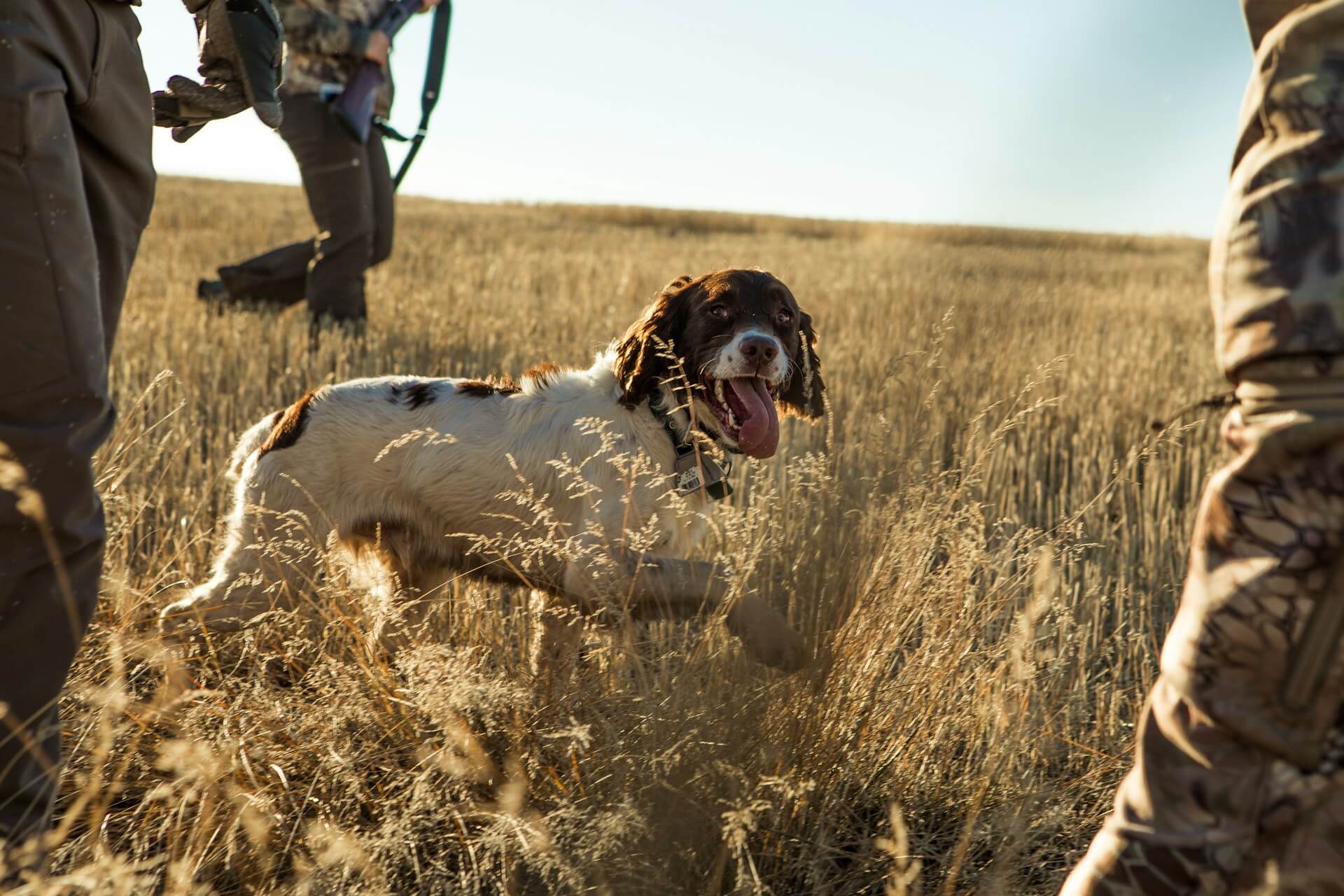
Gundog training – a complete guide to an obedient, effective hunting companion
Master gundog training beyond puppyhood with practical exercises and advice for developing an obedient, effective hunting companion.
Gundog training is essential if you want a reliable, obedient and effective hunting companion. Once puppyhood is over, dedicated gundog training begins, developing and refining teamwork, control and hunting skills. A well-trained gundog improves both safety in the field and the quality of the hunting experience.
In this guide, we cover gundog training beyond puppyhood, focusing on practical exercises, why they matter and how to build a dependable gundog step by step. If you have a younger dog, we also recommend the article Training a gundog puppy – getting off to a good start, which covers laying the essential foundations.
When to start gundog training beyond puppyhood
Most gundogs are ready for more focused training from around six to eight months of age. At this stage, the dog is more mature, both mentally and physically, and better able to cope with structured training.
Further training should always take account of:
The dog's breed and natural abilities
The type of hunting the dog will be used for
The dog's individual temperament and development
Training should progress gradually so that the dog stays motivated and enjoys its work.
Recall is the foundation of all gundog training
Recall is the most important exercise in gundog training and should remain a priority throughout the dog's life. A reliable recall is essential for both safety and effectiveness in the field.
Why recall matters
A reliable recall means:
You remain in control of your gundog at all times
You can stop unwanted chasing of game
Hunting with several dogs can be carried out safely
How to train recall
Start in quiet surroundings without distractions
Use the same verbal command or whistle signal every time
Reward promptly and consistently
Gradually increase the difficulty by introducing game scent and other dogs
The stop command gives you control at a distance
The stop command teaches a gundog to halt immediately, even when working a long way from its handler in the field.
Why stopping matters
The stop exercise helps to:
Improve safety during hunting
Give you better control of the dog at a distance
Reduce the risk of the dog chasing game
Training the stop command
Let the dog move freely in front of you
Give the stop command clearly
Reward a prompt, calm response
Gradually increase the distance and level of distraction
Retrieving is a central part of gundog training
Retrieving is essential for the proper, efficient recovery of game and requires systematic training.
Why retrieving matters
Correct retrieving:
Ensures game is recovered quickly and handled gently
Helps prevent wounded game from being lost
Keeps things calm and orderly during a hunt
How to train retrieving
Insist on steadiness before sending the dog
Train the dog to take a direct line out and back
Practise correct delivery to hand
Have the dog remain sitting after delivery
Searching builds your gundog's independence
Search work teaches a gundog to work independently within a defined area while remaining in contact with its handler.
Why searching matters
Search training:
Makes hunting more effective
Uses the dog's natural sense of smell
Builds concentration and enthusiasm for work
Training search work
Place dummies or game in a defined area
Send the dog to search
Praise calm, methodical work
Calmly pause the exercise if the dog makes a mistake
Steadiness at your stand is essential on group hunts
A gundog must be able to remain calm and still, even when there is activity all around it.
Why steadiness matters
Steadiness at your stand:
Makes the dog suitable for group hunts
Prevents disruption and mistakes
Helps you stay aware of what is happening and maintain safety
How to train steadiness
Have the dog sit or lie beside you
Introduce controlled distractions
Reward calm behaviour
Correct mistakes calmly and consistently
Train your gundog in realistic hunting situations
To develop a dependable gundog, training needs to reflect real hunting conditions:
Train on different types of terrain
Train in varied weather conditions
Train alongside other dogs
Gradually increase the difficulty
Gundog training through hunting associations is recommended
Many hunting associations offer structured gundog training, which can be a great benefit to both dog and handler.
Benefits of gundog training through a hunting association:
Experienced instruction and expert guidance
Training alongside other dogs
Realistic hunting situations
Early correction of mistakes
Conclusion
Gundog training beyond puppyhood requires structure, patience and repetition. By working consistently on recall, stopping, retrieving, searching and steadiness, you can develop an effective, obedient and safe gundog.
For the best possible start, we also recommend the article Training a gundog puppy – getting off to a good start, to give your gundog a consistent, successful training progression.
Happy training, and good luck in the field!