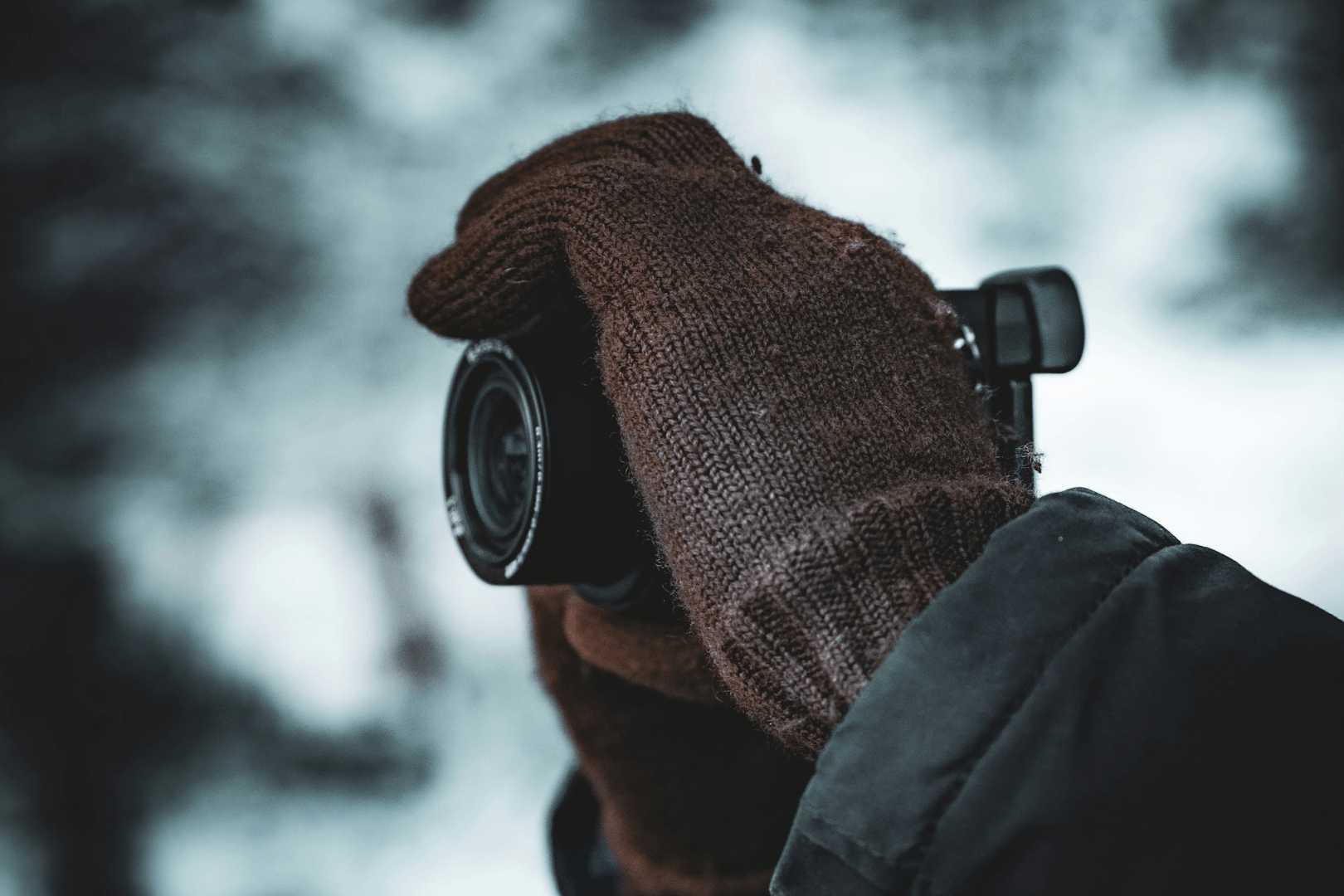
Thermal Spotters for Hunting in 2026: Regulations and Buyer's Guide
Discover how thermal spotters work, what to look for when buying one, and the Danish hunting regulations for thermal imaging equipment in 2026.
Thermal Spotters for Hunting in 2026: Regulations and Buyer's Guide
A thermal imaging monocular can make it possible to detect wildlife in complete darkness, but is the technology worth the investment for hunters in Denmark? And is it even legal to use thermal imaging equipment for hunting in Denmark?
Thermal spotters have become increasingly popular among hunters, and technological advancements have made them available across a wider range of price points. Today, you can purchase a handheld thermal monocular with impressive image quality without necessarily spending a fortune.
However, before investing in a thermal spotter for hunting, there are several important factors to consider. Image quality, detection range, price and, most importantly, Danish hunting regulations all play a significant role in determining whether the investment makes sense.
In this guide, we explain how thermal spotters work, what to look for when choosing one, and which regulations apply in Denmark in 2026.
What Is a Thermal Spotter?
A thermal spotter, also known as a thermal imaging monocular or handheld thermal imager, is an electronic optical device that detects infrared radiation emitted by objects and their surroundings.
Unlike conventional hunting binoculars, a thermal spotter does not require visible light to produce an image. Instead, it detects temperature differences and converts them into a digital image.
This allows wildlife to stand out clearly against cooler surroundings, even in complete darkness.
A thermal spotter can be used for several purposes, including:
Observing wildlife in darkness.
Detecting animals in tall grass and light vegetation.
Spotting movement at longer distances.
Monitoring wildlife habitats without visible light.
Locating raccoon dogs and raccoons during authorised wildlife control operations.
However, thermal spotters cannot see through tree trunks, dense vegetation or ordinary glass. It is also not always possible to identify an animal's species from a thermal image alone.
How Does a Thermal Imaging Monocular Work?
A thermal imaging monocular uses a sensor to detect infrared radiation emitted by objects.
The sensor measures temperature differences between objects and their surroundings, converting this information into an image displayed on a screen.
Most thermal spotters offer different colour palettes, allowing warmer objects to appear white, black or red, depending on the selected setting.
Generally, the better the sensor and optics, the more detail the device can reproduce.
Thermal spotters work both during the day and at night, although weather conditions can affect image quality. Fog, heavy rain and high humidity can reduce the effective detection range.
Are Thermal Spotters Legal for Hunting in Denmark in 2026?
One of the most important questions is whether thermal spotters can legally be used for hunting in Denmark.
It is essential to distinguish between owning thermal imaging equipment and using it during hunting activities.
Is It Legal to Own a Thermal Spotter in Denmark?
Yes. As a general rule, ordinary handheld thermal imaging monoculars can be purchased and owned in Denmark without a special permit.
However, this does not mean they can be freely used to locate game during hunting.
Can You Use a Thermal Spotter for Regular Hunting?
No. As a general rule, thermal spotters cannot be used to locate game during ordinary hunting activities in Denmark.
According to the Danish Hunters' Association (Danmarks Jægerforbund), handheld thermal spotters may only be used to locate game in hunting-related situations involving the authorised control of raccoon dogs and raccoons.
This restriction also applies to locating game that has already been shot.
Therefore, you cannot use a thermal spotter to locate roe deer, red deer or fallow deer during ordinary hunting.
Read more from the Danish Hunters' Association about wildlife control regulations.
When Can Thermal Spotters Be Used for Wildlife Control?
Special regulations apply to the control of raccoon dogs and raccoons in Denmark.
The Danish Wildlife Damage Regulations allow handheld thermal imaging devices to be used to locate these species during authorised control operations.
Raccoon dogs and raccoons are invasive species that may be controlled throughout the year under specific regulations, including at night.
For hunters actively involved in invasive species control, a thermal spotter can therefore be a valuable tool.
Are Thermal Rifle Scopes Legal?
It is important to distinguish between handheld thermal spotters and thermal imaging rifle scopes mounted on firearms.
Thermal weapon sights are not permitted for the control of raccoon dogs and raccoons.
However, electronic night-vision sights using light amplification may be used on rifles when controlling these species at established feeding sites. Purchasing such equipment requires a firearms permit from the Danish police.
Danish Legislation on Thermal Spotters
You can find the relevant legislation and official guidance here:
Hunting legislation can change. Always check the latest regulations and any applicable permit conditions before using thermal imaging equipment for hunting or wildlife control.
Which Thermal Spotter Should You Choose?
There are many thermal imaging monoculars on the market, and performance can vary considerably between models.
If you are considering buying a thermal spotter in 2026, there are five key factors worth examining.
1. Sensor Resolution
Sensor resolution plays a major role in determining how much detail a thermal spotter can display.
The most common resolutions include:
256 × 192 pixels: Suitable for basic wildlife observation at shorter distances.
384 × 288 pixels: A good balance between price and image quality.
640 × 512 pixels: Higher image detail and better opportunities for observation at longer distances.
If you plan to use your thermal spotter across large open fields or expansive hunting grounds, a higher-resolution sensor can be beneficial.
2. Thermal Sensitivity (NETD)
NETD, or Noise Equivalent Temperature Difference, indicates how small a temperature difference a thermal sensor can detect.
Generally, the lower the NETD value, the better the sensor can distinguish subtle temperature differences.
An NETD value below 25 mK is a good starting point if you want high thermal sensitivity.
This can be particularly important in damp or humid conditions, where the temperature contrast between wildlife and the surrounding environment may be less pronounced.
3. Detection Range and Field of View
When comparing thermal spotters, manufacturers often highlight their maximum detection range.
However, it is important to understand that detection range is not the same as identification range.
A thermal spotter may detect a heat signature at a considerable distance without providing enough detail to determine which animal species you are observing.
The objective lens also influences both detection range and field of view.
A larger objective lens can be beneficial when scanning open fields, while a wider field of view is often more practical in dense woodland.
4. Battery Life and Weight
A thermal spotter should be easy to carry and operate in the field.
Before buying, consider:
How many hours of battery life it offers.
Whether the battery is replaceable.
Whether the controls can be operated while wearing hunting gloves.
How quickly the device starts up.
Whether it is waterproof or water-resistant.
How much it weighs.
A lightweight, compact thermal monocular can often be more practical than a heavier model packed with features you rarely use.
5. Image Quality and Ease of Use
Two thermal spotters with identical sensor resolutions can still produce noticeably different images.
This is due to differences in optical quality, image processing and thermal sensitivity.
For this reason, it is worth testing several models outdoors before making your final decision.
How Much Does a Thermal Spotter Cost in 2026?
The price of a thermal spotter depends primarily on sensor resolution, objective lens size, image quality and additional features.
As a general guide, thermal spotters can be divided into the following price categories:
DKK 2,000–5,000: Entry-level thermal spotters primarily suited to observing wildlife at shorter distances.
DKK 5,000–10,000: Mid-range thermal monoculars offering improved image quality, higher resolution and additional features.
DKK 10,000–20,000: More advanced models with high-resolution sensors, better optics and longer detection ranges.
Over DKK 20,000: Premium thermal imaging devices with advanced technology, excellent image quality and features designed for demanding observation conditions.
These prices are indicative and may vary depending on the manufacturer and model.
For many hunters, a mid-range thermal spotter offers a sensible balance between performance and cost.
Advantages and Disadvantages of Thermal Spotters for Hunting
Advantages of a Thermal Spotter
Detects heat signatures from wildlife even in complete darkness.
Makes it easier to spot animals in tall grass and light vegetation.
Does not require visible light and can be used during both day and night.
Can detect heat signatures at considerable distances.
Provides an effective tool for the authorised control of raccoon dogs and raccoons.
Disadvantages of a Thermal Spotter
Generally cannot be used to locate game during ordinary hunting activities in Denmark.
Can be an expensive investment, especially if you want high image quality.
Cannot see through dense vegetation, tree trunks or ordinary glass.
Does not always allow reliable identification of animal species.
Image quality and detection range can be negatively affected by fog, rain and high humidity.
Is a Thermal Spotter Worth the Money in 2026?
Whether a thermal spotter is worth the investment depends primarily on how you intend to use it.
If you mainly hunt roe bucks, practise stand hunting or enjoy stalking game in Denmark, the practical use of a thermal spotter will be limited by Danish hunting regulations.
In these situations, your money may be better invested in a quality pair of hunting binoculars, a riflescope or other essential hunting equipment.
However, if you are actively involved in the authorised control of raccoon dogs or raccoons, a thermal spotter can be an excellent investment.
The technology allows you to locate heat signatures in darkness, potentially making wildlife control operations significantly more effective.
A thermal spotter can also be useful for wildlife enthusiasts who want to observe animals outside hunting activities.
Frequently Asked Questions About Thermal Spotters
What Is the Difference Between a Thermal Spotter and a Night Vision Device?
A thermal spotter detects infrared radiation emitted by objects, while a traditional image-intensifier night vision device amplifies existing light.
A thermal spotter can therefore operate in complete darkness without requiring visible light.
Can You Use a Thermal Spotter for Roe Buck Hunting?
No. Thermal spotters cannot be used to locate roe deer during ordinary roe buck hunting in Denmark.
Can You Use a Thermal Spotter to Locate Wounded Game?
According to the Danish Hunters' Association, handheld thermal spotters cannot be used to locate game during ordinary hunting activities, including game that has already been shot.
When conducting a wounded game recovery, the specific regulations and any applicable exemptions should always be checked.
Can a Thermal Spotter See Through Bushes?
A thermal spotter may detect heat through gaps in vegetation, but it cannot see through dense bushes, tree trunks or other solid objects.
What Is the Best Resolution for a Thermal Spotter?
A resolution of 384 × 288 pixels often provides a good balance between price and image quality.
If you want greater detail at longer distances, a resolution of 640 × 512 pixels may be a better choice.
What Is the Best Thermal Spotter for the Money?
The best choice depends on your intended use.
Sensor resolution, NETD value, detection range, field of view and battery life are generally more important than the brand name alone.
Conclusion: Should You Buy a Thermal Spotter?
A thermal spotter is an impressive piece of technology that opens up new opportunities for observing wildlife.
In 2026, thermal monoculars are available across a wide range of price points, and you do not necessarily need to buy the most expensive model to achieve good image quality.
However, Danish hunters must pay particular attention to the legislation governing their use.
While thermal spotters have limited applications during ordinary hunting, they can be valuable tools for the authorised control of raccoon dogs and raccoons.
Our recommendation is to choose your equipment based on your specific needs and always check the relevant regulations before taking thermal imaging equipment into the field.
And remember, even the best thermal spotter can never replace good fieldcraft, an understanding of game behaviour and responsible hunting practices.
Good hunting and straight shooting!