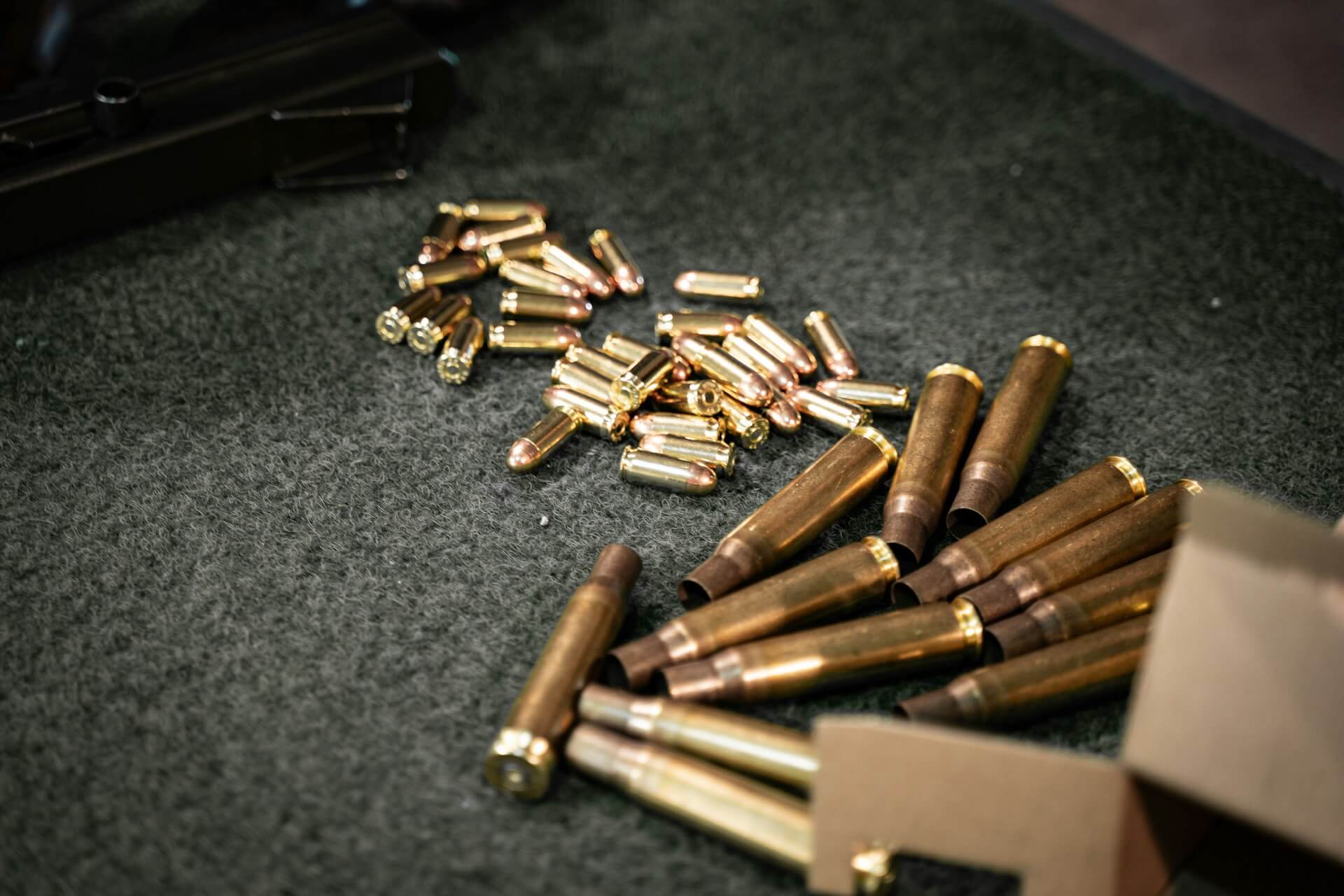
Rifle ammunition for hunting – a guide to bullet weight, energy, lead-free ammunition and cartridge selection
A guide to rifle ammunition for hunting. Learn about bullet weight, energy, lead-free ammunition and why testing cartridges in your own rifle matters.
Choosing the right rifle ammunition for hunting is essential for both accuracy and a humane kill. Bullet weight, powder charge, bullet construction and energy all have a major influence on how ammunition performs in practice.
Denmark also has clear rules on both bullet energy and the types of ammunition permitted for hunting. Rifle ammunition used for hunting must now be lead-free, for example.
In this guide, we cover the most important things you should know about rifle ammunition for hunting.
What makes up a rifle cartridge?
A rifle cartridge consists of four main components:
• Case
• Primer
• Propellant powder
• Bullet (projectile)
When the firing pin strikes the primer, it ignites the powder. This generates high gas pressure inside the cartridge, propelling the bullet down the barrel at very high speed.
The amount and type of powder have a major influence on bullet velocity and energy. Bullet weight and construction also play an important role in accuracy and terminal performance on game.
Bullet weight in rifle ammunition
Bullet weight is usually expressed in grains (gr), although many Danish hunters also refer to it in grams (g).
Some of the most common bullet weights in hunting ammunition are:
• 120 gr (approx. 7.8 g)
• 130 gr (approx. 8.4 g)
• 140 gr (approx. 9.1 g)
• 150 gr (approx. 9.7 g)
• 165 gr (approx. 10.7 g)
• 180 gr (approx. 11.7 g)
These bullet weights are often found in popular hunting calibres such as:
• 6.5x55
• .308 Winchester
• .30-06 Springfield
Lighter bullets typically offer higher velocity and a flatter trajectory. Heavier bullets often provide better penetration and can transfer more energy to the animal.
Different types of hunting bullets
Several types of bullets are available for rifle hunting ammunition.
Soft Point (SP)
A traditional hunting bullet with a soft tip that expands in the animal and transfers energy effectively.
Bonded bullets
The core and jacket are bonded together. This provides good penetration and controlled expansion.
Lead-free bullets
These projectiles are typically made from copper or copper alloys. They are now widely used for hunting.
Polymer-tipped bullets
Bullets with polymer tips offer good aerodynamic performance and expand rapidly on impact.
Lead-free rifle ammunition for hunting
Denmark has introduced a requirement for lead-free rifle ammunition for hunting and wildlife control. This means that bullets containing lead may no longer be used for rifle hunting.
Lead-free bullets are typically made from:
• Copper
• Copper alloys
• Other lead-free metals
Modern lead-free hunting ammunition performs very effectively and often provides good penetration.
When switching to lead-free ammunition, however, bullets may behave differently from traditional lead bullets. It is therefore important to re-zero your rifle and test the ammunition before going hunting.
Energy in rifle ammunition
Bullet energy is measured in joules (J). It depends on factors including bullet weight and velocity. A heavier bullet can often deliver more energy, but velocity also plays a major role.
Energy matters in hunting because it affects whether an animal can be killed quickly and humanely.
Danish law sets requirements for calibre, bullet weight and energy when hunting with a rifle. Energy is normally assessed at a distance of 100 metres.
The following requirements apply to larger deer species such as red deer, fallow deer and sika deer:
• A bullet weight of at least 9 grams (approx. 139 gr)
• A bullet diameter of at least 6.5 mm
• At least 2,000 joules at 100 metres
The following requirements apply to smaller deer and predatory species, such as roe deer and foxes:
• A bullet diameter of at least 5.6 mm
• At least 800 joules at 100 metres
These requirements mean that many calibres can be used for roe deer, while larger deer species require more powerful calibres and heavier bullets.
How to find the energy figures for your ammunition
There are several ways to find the energy figures for your rifle cartridge.
The easiest method is to check the information on the ammunition box, where manufacturers typically list:
• Muzzle velocity
• Energy at various distances
You can also find ballistic tables on manufacturers’ websites.
There are also many ballistic apps and calculators that allow you to enter the calibre, bullet weight and velocity to calculate bullet energy.
Always test ammunition in your own rifle
Although two cartridges may be almost identical on paper, this does not necessarily mean they will shoot equally well in every rifle.
Different rifles can respond differently to the same ammunition. This is partly due to differences in:
• Barrels
• Rifling
• Chambers
• Tolerances
It is therefore important to test different types of rifle ammunition at the range. This allows you to find the cartridge that delivers the best accuracy in your particular rifle.
Many hunting retailers sell sample rounds or smaller packs of ammunition, allowing you to try different types without having to buy several full boxes. Some retailers also have access to shooting ranges where you can test ammunition and see how well your rifle groups its shots.
By trying several types of ammunition, you can find the cartridge that performs best in your own rifle and delivers the best accuracy.
Conclusion
Choosing the right rifle ammunition for hunting involves more than just calibre. Bullet weight, powder charge, bullet construction and energy all have a major influence on shot effectiveness and accuracy.
The ammunition must also meet Danish energy requirements for the species you are hunting, and rifle ammunition used for hunting must now be lead-free.
By testing different cartridges and understanding their characteristics, you can find the option that works best in your own rifle and supports safe, ethical hunting.