Hunting Safety – The Complete Guide to Safe Hunting
Learn the essential rules of hunting safety. From firearm handling to communication on group hunts – everything you need to know to hunt safely.
Introduction to Hunting Safety
Safety is the single most important aspect of hunting. As a hunter, you have a great responsibility – to yourself, your fellow hunters and those around you. This guide covers the essential safety rules and good habits you should know.
The 4 Golden Rules of Firearm Safety
Always follow these rules – without exception:
- Always treat every firearm as if it is loaded – Even when you know it is unloaded
- Never point a firearm at anything you do not intend to shoot – Keep the muzzle pointing in a safe direction
- Keep your finger off the trigger – Until you are ready to shoot
- Be sure of your target and what lies beyond it – Make sure you have a safe backstop
Safety on Group Hunts
Communication and discipline are essential on group hunts:
- Attend the pre-hunt briefing – This provides important information about how the hunt will be conducted
- Know your safe shooting angles – Typically 45° to either side, and never towards a neighbouring peg
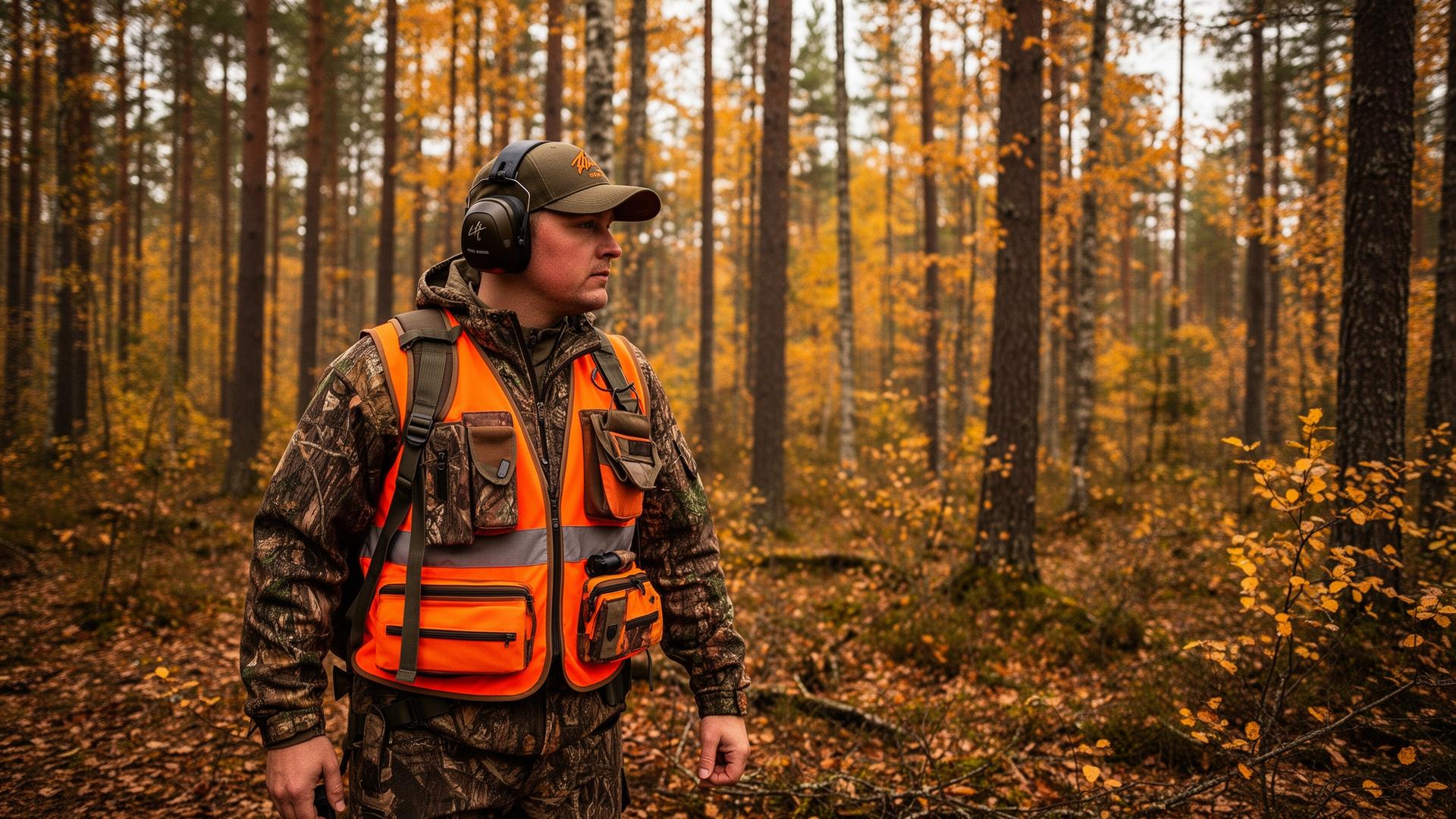
- Wear a reflective vest or high-visibility colours – So others can see you clearly
- Stay at your peg – Never leave your position until the end-of-hunt signal has been given
- Communicate clearly – Use a radio or agreed signals
Firearm Transport and Storage
Handle firearms correctly when you are not hunting:
- Transport firearms unloaded in a closed gun slip or case
- Store firearms in an approved gun cabinet bolted to the wall or floor
- Store ammunition separately in a locked cabinet
- Keep gun cabinet keys inaccessible to unauthorised people
Personal Safety Equipment
Equipment that helps keep you safe while hunting:
- Hearing protection – Protects against hearing damage from gunfire
- Shooting glasses – Protect your eyes from branches and gunpowder particles
- High-visibility vest – Makes you visible to other hunters
- First aid kit – Always keep one in your hunting bag
First Aid and Emergencies
Be prepared for accidents:
- Know basic first aid
- Always carry a charged mobile phone
- Know the address of your hunting ground so you can give it to the emergency services
- Always tell someone where you are hunting and when you expect to be home
Final Advice
Hunting safety comes down to habits and discipline. Practise good habits until they become second nature. Remember: no hunting experience is worth risking a human life for. If in doubt – do not shoot.